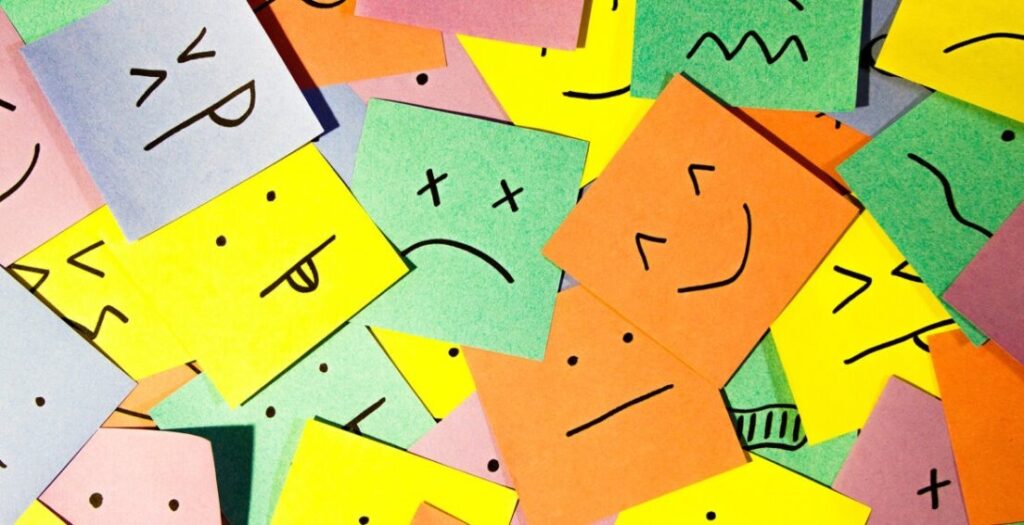

From social skills, communication and leadership module held by Prof. Monaco for the “Upskilling for Governance” course, it is immediately clear that the integration of cognitive and emotional processes is essential for the development of skills. The development of skills is not simply a process of acquiring knowledge, but also a dynamic journey that involves the whole person. Elements such as life experiences and contexts shape learning methods and, therefore, the evolution of skills themselves.
Cognitive processes are the higher mental functions that allow us to perceive, remember, think, solve problems and make decisions. Among the main ones are: Attention, Memory, Language, Reasoning, Problem solving, Decision making.
The brain takes shortcuts (heuristics) that can lead us to predictable errors:
- Confirmation bias: we tend to seek only information that confirms what we already think.
- Halo effect: one positive characteristic influences the overall assessment.
- Loss aversion: the fear of losing something is stronger than the desire to gain it.
- Overconfidence bias: we overestimate our abilities.
Decision-making is a structured method for solving problems or achieving goals, involving gathering information, analysing alternatives and choosing the most suitable solution. It is a crucial process for individuals, organisations and companies, enabling them to guide their actions effectively. Therefore, in formal terms, decision-making can be considered as the result of mental processes (cognitive and emotional) that determine the selection of a course of action from among several alternatives.
Emotions are psychological and physiological states that respond to internal or external stimuli, influencing our thoughts, actions and behaviours. They are not the opposite of rationality, but evolutionary functions that guide action. In the workplace, they influence:
- The quality of interpersonal relationships
- Motivation and psychological well-being
- Decision-making and management processes
- The perception and management of conflict
- The ability to cope with stress
Working well is not just about knowing rules, regulations and procedures. It also means knowing how to read situations, manage pressure, communicate effectively and build relationships with colleagues and citizens. This requires skills that go beyond technical rationality: emotional skills are also needed.
Emotional intelligence is the ability to recognise, understand, manage and use one’s own emotions and those of others to improve communication, relationships and one’s life in general. It is considered a fundamental skill for personal and professional well-being. Emotions in the workplace are a fundamental part of the work experience and can have a significant impact on productivity, personal well-being and relationships between colleagues. Emotional regulation is the ability to consciously manage emotions in order to respond adaptively to environmental stimuli. It is the set of conscious and voluntary processes aimed at recognising, modulating and functionally utilising one’s own and others’ emotions in order to improve personal well-being and the quality of interpersonal relationships.
Work-related stress is the physical, emotional and behavioural response to demands and pressures perceived as exceeding one’s resources. Stress management refers to the set of cognitive, behavioural and emotional strategies implemented to reduce, modulate or cope with perceived stress.
The adoption of artificial intelligence is steering public administrations towards a post-digital government model in which empathy, in its cognitive, emotional and experiential dimensions, is central to understanding citizens’ needs and using data in a targeted way, personalising services and solutions.
Embracing this approach means that the public system must take a leading role in transforming the entire ecosystem, promoting innovation that is sustainable, accessible and inclusive. This is a challenge that requires the adoption of a new organisational culture, based on continuous training, knowledge sharing and the development of widespread and conscious leadership.