SPID and CIE have simplified access to Italian public digital services, but citizens still face difficulties after authentication. Fragmented portals, unclear administrative language and insufficient guidance can make online procedures difficult to complete. The article highlights the gap between successful digital identification and an effective, user-friendly experience of public services.
Living in a small, isolated village shouldn't mean being cut off from essential healthcare. In 2026, Castel San Vincenzo launched its "Smart Village" project to tackle this head-on. By introducing video consultations, health monitoring, and remote care, the town is reducing the need for long trips to regional hospitals—showing how…
Molise has become the first Italian region to complete the national Ultra-Broadband Plan (BUL), reaching 100% of targeted municipalities with an FTTH network capable of up to 10 Gbps. Promoted by MIMIT and built by Open Fiber, the infrastructure covers over 133,000 premises and 688 public facilities across 1,700 km…
Small towns often struggle to keep up with digital transformation due to limited budgets and staff. To solve this, the Molise region relies on Molise Dati S.p.A., an in-house public company that acts as an IT engine for local authorities. Through the Integrated Territorial Information System (SIIT), even the smallest…
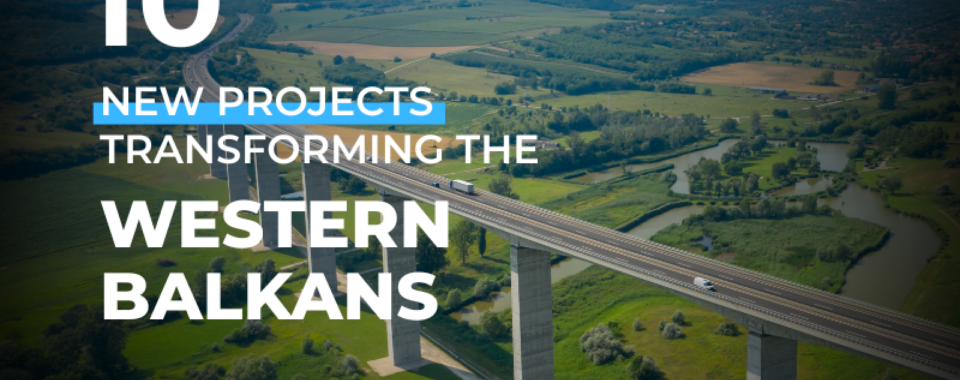
The European Commission has announced a €171 million package to support infrastructure development and private-sector growth in the Western Balkans. The funding combines IPA III, Western Balkans Investment Framework resources and the Reform and Growth Facility, supporting digital connectivity, clean energy, transport, education, environmental protection and access to finance for…
"Casa delle Tecnologie Emergenti" (CTE) in Molise serves as a specialized hub dedicated to fostering research, experimentation, and technology transfer.