
The GOVERNANCE project has released the DIGITS Assessment Report for the Molise Region, developed by regional experts to evaluate the digital maturity of local public administrations and identify key priorities for future digital transformation policies.
The assessment applies the DIGITS framework, a structured model that evaluates municipalities across six strategic domains: Digital Infrastructure, Intangibles, Governance and Digital Strategy, Information, Technology, and Sustainability and Social Impact.
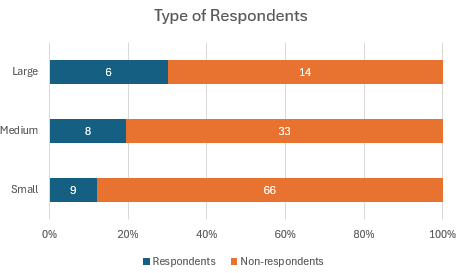
The analysis involved 23 municipalities across the Molise territory, covering small, medium and large local administrations. The report specifically focuses on the demographic structure of the region, where municipalities with fewer than 1,000 inhabitants represent the dominant territorial reality.
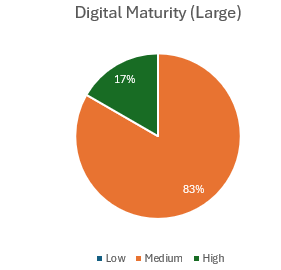
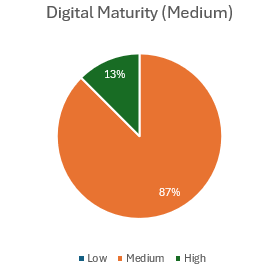
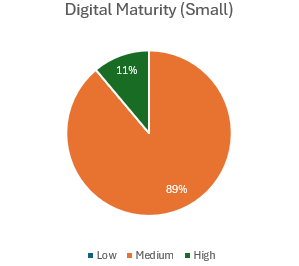
The results show that most municipalities are positioned in the medium digital maturity band, with particularly strong performance in Governance and Digital Strategy, Information, and Sustainability and Social Impact. GDPR compliance and internal digital processes emerge as highly consolidated areas across the region.
The report also highlights an interesting pattern: medium-sized municipalities often outperform larger administrations in sustainability, digital culture and organizational flexibility, demonstrating a highly balanced maturity profile.
At the same time, the Technology domain represents the main regional weakness. The adoption of advanced technologies such as Artificial Intelligence, IoT, Blockchain and Big Data remains extremely limited across all municipality sizes, revealing a significant innovation gap within the regional digital ecosystem.
The DIGITS Assessment Report provides evidence-based insights to support future regional strategies aimed at strengthening technological innovation, digital governance, monitoring systems and data-driven public administration processes.